You look at yourself in the mirror first thing in the morning and last thing in the evening.
We believe every single moment you brush your teeth in the mirror should remind you of something worth believing about yourself.
The ritual
The most powerful moments of your day are hiding in your bathroom.
You don't check your phone while brushing your teeth. You're not in a meeting. For two minutes, twice a day, you're alone with your own thoughts. We think that deserves something more than a generic plastic stick.
Morning
Whatever goes in first becomes the lens.
Before the inbox, before the news, before anyone else gets an opinion in. Psychologists call it priming: the first thing in your head quietly shapes what you notice in everything after it.
Those two minutes at the mirror are the one slot of the day nobody else is competing for.
Night
You take the last thought of the day to bed with you.
Whatever is still turning over while you brush is what follows you under, and some of it comes back as dreams. Call that manifestation or call it rehearsal.
Either way it is the final input of the day, and most people hand that slot to a screen.
Self-Talk
The science behind the words you repeat
Repetition is how a sentence goes from something you read to something you believe. Psychologists have spent forty years mapping that path.
Toothily is built directly on it: a believable line and a mirror moment you already show up to twice a day. The research below is why we built it that way.
Identity
Who you think you are, and what changes it
The mirror is the one place you meet yourself every single day. What happens in that moment shapes how you carry the rest of it.
These are the studies on self-image and confidence, and why the right sentence at the mirror lands harder than the same sentence anywhere else.
Thought to Action
The gap between meaning to and doing
Wanting change is easy. Starting is the hard part, and the fix is almost embarrassingly small: attach the new thing to something you already do.
Brushing is the most reliable habit you own. That is exactly why Toothily lives there.

Featured research
The Scientists Who Proved Talking to Yourself Isn't Crazy
For decades, self-affirmation was dismissed as self-help fluff. Then the neuroscientists ran the fMRI studies. Here's what they found.
Read the studyAttention
What you notice is not neutral
You find what you look for. Your brain filters the whole day through whatever you loaded into it first.
Priming, expectation, and attention: the machinery that decides whether you notice reasons to keep going or reasons to quit.
Manifestation
What manifestation gets right, and what it does not
Underneath the crystals, manifestation points at something real: what you rehearse, you move toward.
These posts keep the part that works: future thinking, visualization, and the psychology of rehearsing who you want to be.
The Brain
How the brain actually changes
Your brain physically changes around what you repeat. Slower than the wellness industry promises, and more reliably than the cynics admit.
How learning actually sticks, and why small daily reps beat big rare gestures.
The First 30 Minutes: Why Your Brain Runs Differently at Dawn
There is a measurable hormonal event in your first half hour awake. The research on the cortisol awakening response, and why the first inputs of the day carry extra weight.
Read moreWhat Brain Scans Can Tell Us, and What They Cannot
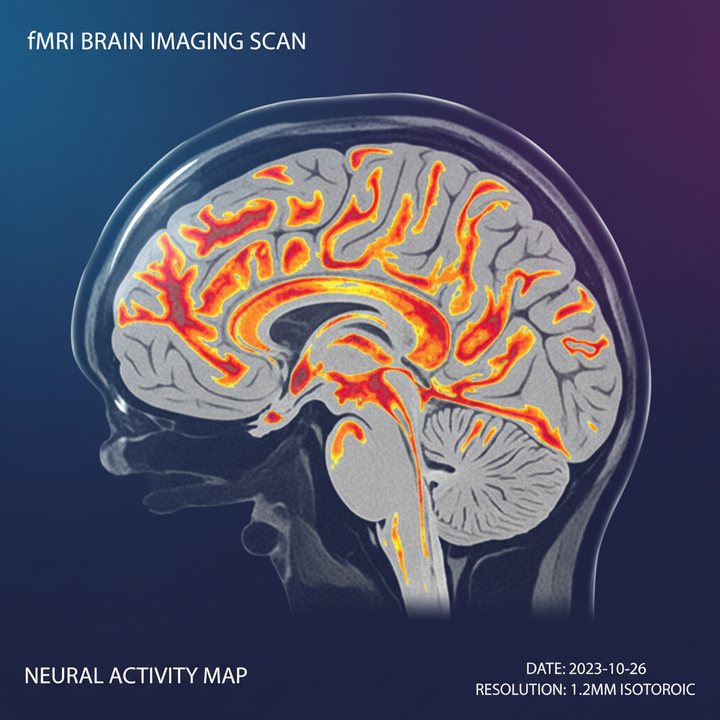
A brain image is a statistical map of differences between two conditions, not a photograph of a mind. Four findings explain why that distinction keeps getting lost.
Read moreWhy Retrieval Beats Re-Reading: The Testing Effect
Retrieval practice outperforms repeated study at every delay that matters, and the people doing it are usually convinced it is working worse.
Read moreWhat "Neurons That Fire Together Wire Together" Actually Means
The phrase describes a real, well-documented property of individual synapses. It does not describe what happens when you think a positive thought.
Read moreMemory Reconsolidation: Can Old Memories Actually Be Updated?
Retrieving a memory can briefly return it to an editable state. That is well established in rodents and much shakier in people, and the gap matters.
Read moreHow Long Does It Actually Take to Change Your Brain?
There is no single answer, because "change your brain" describes at least six different things happening on six different timescales. Here they are, in order.
Read moreDoes Sleep Strengthen What You Thought About During the Day?
Sleep-dependent memory consolidation is real and well documented for skills and facts. For beliefs and self-concept, nobody has shown it.
Read moreCan You Actually Rewire Your Brain?
The adult brain does change structurally in response to sustained experience. The word "rewire" oversells how fast, how much, and how permanently.
Read moreCan Thinking Alone Change Your Brain?
Imagining a piano exercise produced motor cortex changes close to those from playing it. The conditions that made that work are the whole story.
Read moreCan Mental Practice Actually Improve Real Performance?
Mental rehearsal produces a real, measurable performance gain that is reliably smaller than physical practice and fades without refreshing.
Read moreYour Brain Has About Five Minutes to Decide What Kind of Day You're Going to Have
Neuroscientists have mapped what happens to your brain in the minutes right after waking. The window is short, the research is clear, and most people waste it entirely.
Read moreOral Care
Bamboo, plastic, and what you put in your mouth twice a day
A toothbrush is small. The number of them is not.
Where plastic brushes end up, what they shed along the way, how bamboo behaves differently as a handle material, and the everyday oral care guidance worth actually following.
The full library · 12 articles
Keep digging.
Everything else we have published on the science, the materials, and the routine.