#SmileForward

You look at yourself in the mirror first thing in the morning and last thing in the evening.

We believe every single moment you brush your teeth in the mirror should remind you of something worth believing about yourself.

41 articles7 topicsPrimary sources linked

The ritual

The most powerful moments of your day are hiding in your bathroom.

You don't check your phone while brushing your teeth. You're not in a meeting. For two minutes, twice a day, you're alone with your own thoughts. We think that deserves something more than a generic plastic stick.

Morning

Whatever goes in first becomes the lens.

Before the inbox, before the news, before anyone else gets an opinion in. Psychologists call it priming: the first thing in your head quietly shapes what you notice in everything after it.

Those two minutes at the mirror are the one slot of the day nobody else is competing for.

Night

You take the last thought of the day to bed with you.

Whatever is still turning over while you brush is what follows you under, and some of it comes back as dreams. Call that manifestation or call it rehearsal.

Either way it is the final input of the day, and most people hand that slot to a screen.

Self-Talk

The science behind the words you repeat

Repetition is how a sentence goes from something you read to something you believe. Psychologists have spent forty years mapping that path.

Toothily is built directly on it: a believable line and a mirror moment you already show up to twice a day. The research below is why we built it that way.

Identity

Who you think you are, and what changes it

The mirror is the one place you meet yourself every single day. What happens in that moment shapes how you carry the rest of it.

These are the studies on self-image and confidence, and why the right sentence at the mirror lands harder than the same sentence anywhere else.

Thought to Action

The gap between meaning to and doing

Wanting change is easy. Starting is the hard part, and the fix is almost embarrassingly small: attach the new thing to something you already do.

Brushing is the most reliable habit you own. That is exactly why Toothily lives there.
Featured research

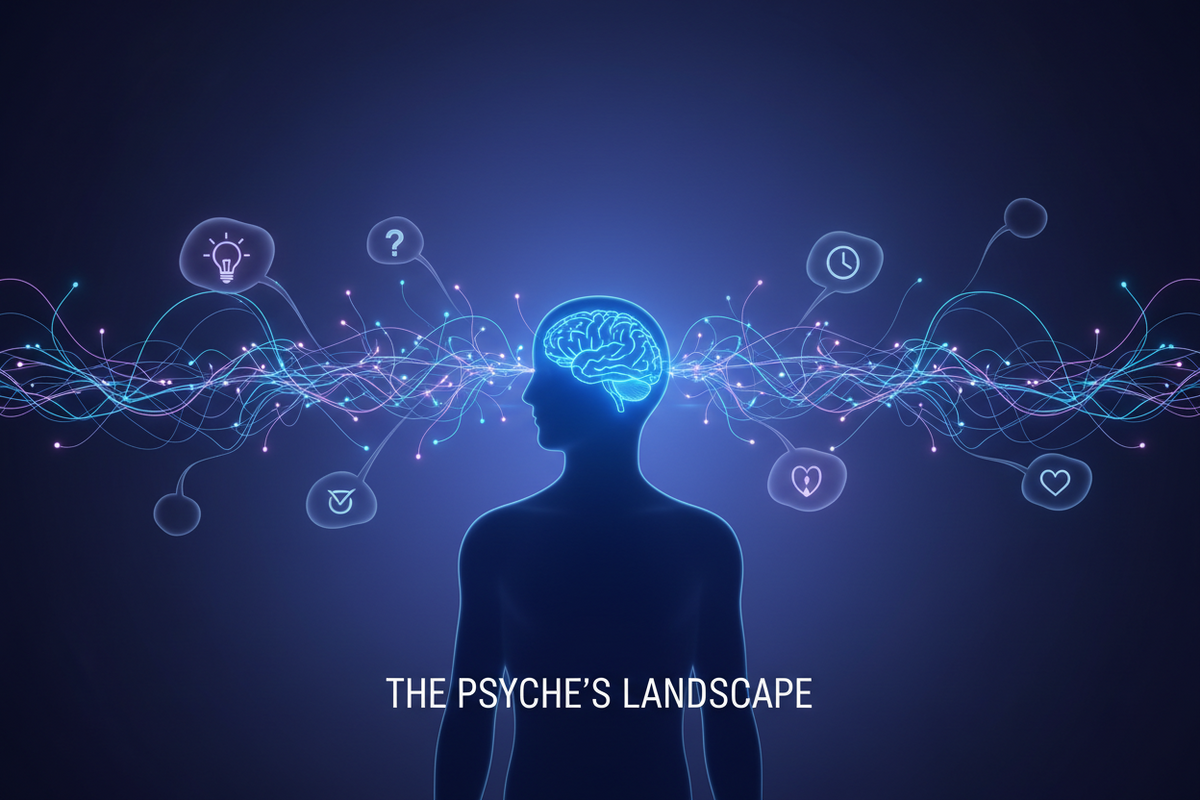
The Scientists Who Proved Talking to Yourself Isn't Crazy

For decades, self-affirmation was dismissed as self-help fluff. Then the neuroscientists ran the fMRI studies. Here's what they found.

Read the study

Attention

What you notice is not neutral

You find what you look for. Your brain filters the whole day through whatever you loaded into it first.

Priming, expectation, and attention: the machinery that decides whether you notice reasons to keep going or reasons to quit.

Manifestation

What manifestation gets right, and what it does not

Underneath the crystals, manifestation points at something real: what you rehearse, you move toward.

These posts keep the part that works: future thinking, visualization, and the psychology of rehearsing who you want to be.

The Brain

How the brain actually changes

Your brain physically changes around what you repeat. Slower than the wellness industry promises, and more reliably than the cynics admit.

How learning actually sticks, and why small daily reps beat big rare gestures.

Oral Care

Bamboo, plastic, and what you put in your mouth twice a day

A toothbrush is small. The number of them is not.

Where plastic brushes end up, what they shed along the way, how bamboo behaves differently as a handle material, and the everyday oral care guidance worth actually following.

The full library · 41 articles

Keep digging.

Everything else we have published on the science, the materials, and the routine.
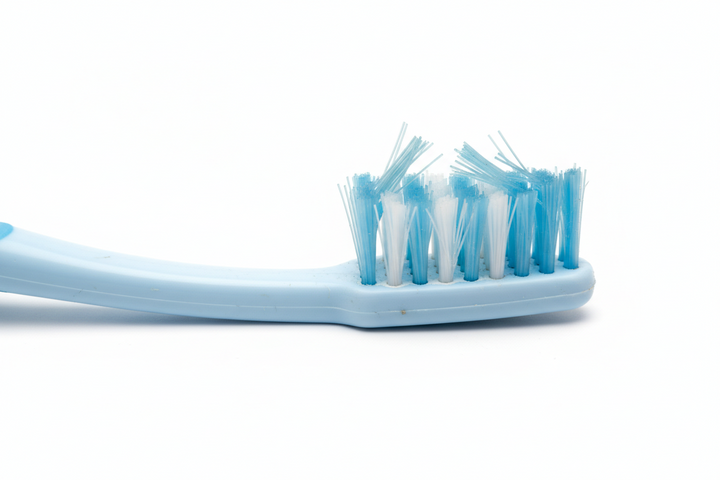
What Actually Happens to Plastic Toothbrushes?
Bamboo & Oral Care4 min read
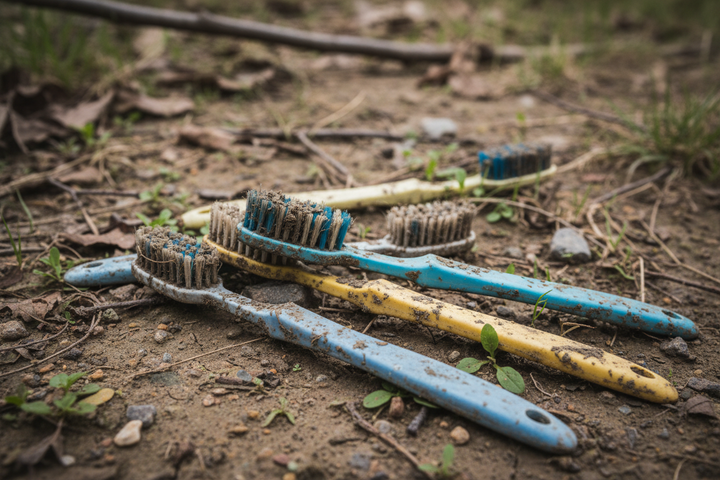
What Actually Happens to Plastic Toothbrushes?
About 1 billion plastic toothbrushes are thrown away in the US every year. None of them are recyclable. Here's exactly where they go and how long they stay there.
Read article
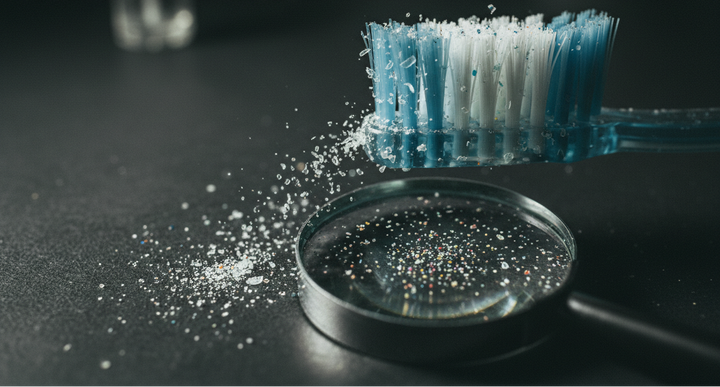
How Many Microplastics Are You Swallowing From Your Toothbrush Every Day?
Bamboo & Oral Care3 min read
How Many Microplastics Are You Swallowing From Your Toothbrush Every Day?
Research shows plastic toothbrush bristles shed millions of microplastic particles per year directly into your mouth. Here's what the studies found and what you can do about it.
Read article
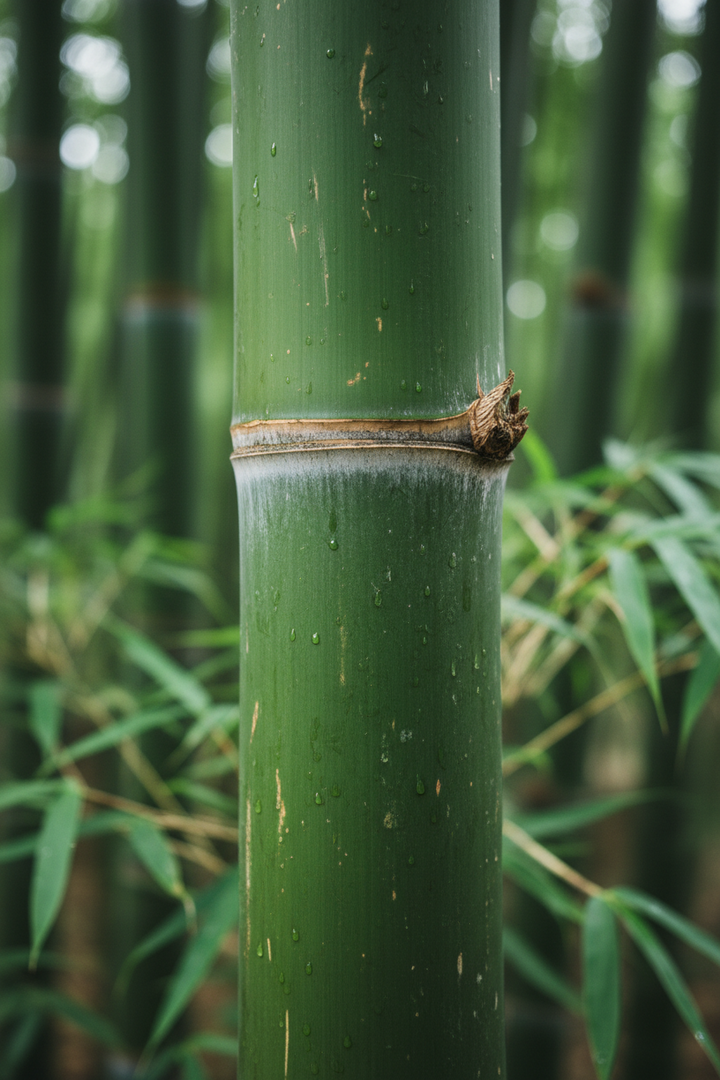
What Bamboo Figured Out That Plastic Never Could
Bamboo & Oral Care3 min read
What Bamboo Figured Out That Plastic Never Could
Bamboo has tensile strength comparable to steel, grows three feet a day, and has been solving human problems for 5,000 years. So why did we spend 80 years replacing it with plastic?
Read article
The Toothbrush Hasn't Changed in 80 Years. That's a Design Problem.
Bamboo & Oral Care3 min read
The Toothbrush Hasn't Changed in 80 Years. That's a Design Problem.
The nylon toothbrush was invented in 1938. Almost nothing about it has changed since. Here's why, who benefits from the status quo, and what a better design actually looks like.
Read article
The 2022 Study That Should Have Changed What You Put in Your Mouth Every Morning
Bamboo & Oral Care3 min read
The 2022 Study That Should Have Changed What You Put in Your Mouth Every Morning
In March 2022, a team of researchers at Vrije Universiteit Amsterdam published a paper that received a few days of news coverage and then largely disappeared. The finding was this: for the first time in recorded science, microplastics were detected in human blood. Not in fish. Not in soil samples. In 17 of the 22 adult volunteers tested, researchers found particles of plastic smaller than five millimeters circulating in their bloodstream. PET - the same material used in water bottles. Polystyrene. Polyethylene. The stuff of modern packaging, now confirmed to be inside the people who use it. The paper didn't claim to know what this meant for long-term health. That's not how science works. What it did was establish, definitively, that the blood-brain barrier is not impermeable to plastic particles, that we are ingesting and inhaling microplastics faster than our bodies are clearing them, and that the question is no longer whether we're absorbing plastic - it's how much, from where, and at what cost. The exposure routes nobody talks about Most microplastics conversation focuses on water. Bottled water contains an estimated 240 plastic particles per liter on average. Tap water is better but not clean. The ocean contamination angle gets regular coverage, particularly anything involving sea salt or fish consumption. What gets far less attention is oral exposure - meaning what enters your body through your mouth during daily routines that aren't eating or drinking. A conventional plastic toothbrush is made from polypropylene - the handle - and nylon bristles. Over the course of use, bristles break down microscopically. Filaments fray. You are, in the most literal sense, brushing nylon particles against your gum tissue twice a day, for two minutes at a time, three-quarters of a billion times across an average lifetime of toothbrush use. Researchers at the University of Exeter identified toothbrush bristles as a direct microplastic exposure source in 2021, ahead of the blood study by a year. This doesn't make plastic toothbrushes uniquely catastrophic compared to other sources. But it does make them something specific: a voluntary, daily, intimate exposure that takes place inside your mouth, a site of high mucosal absorption, in close proximity to your throat and digestive system - and one that is almost trivially easy to change. What the science actually says we should do The honest answer is that the science on microplastics and human health is still early. We know they're present in blood, lungs, liver, and placental tissue. We know that at high concentrations they cause inflammation in cell cultures. We don't yet have longitudinal human data on disease outcomes - that research is underway but takes time by definition. What that means practically is this: the precautionary argument is strong even without a definitive harm threshold. You're already reducing exposure in other areas - maybe you don't microwave in plastic containers, maybe you use a filter for your water. The question is just whether you've thought about what you put in your mouth before breakfast. Bamboo toothbrushes with plant-based bristles exist. They work the same way. They're not significantly more expensive over a year of use, especially on subscription. The bamboo handle biodegrades in months rather than centuries. The plant-based bristles - typically derived from castor oil - don't shed nylon particles. That's it. That's the whole intervention. Not a diet overhaul. Not a supplement stack. Just a different object that does the same job, without adding to what that 2022 blood study found. A note on what we don't know Good science writing requires saying this clearly: we don't know the threshold at which circulating microplastics cause measurable harm in humans. Some researchers believe the quantities currently found in blood are below any meaningful biological effect. Others argue that accumulation over decades is the variable we're not yet measuring properly. What we do know is that microplastic concentrations in human tissue are rising in parallel with global plastic production, which has increased by a factor of 200 since 1950. The direction of the trend is not ambiguous, even if the destination is still being mapped. The 2022 Amsterdam study was not a verdict. It was a finding. The verdict is still being written. In the meantime, two minutes. Twice a day. It's worth thinking about what's in your hand. Toothily brushes are made from Moso bamboo with soft bristles - a bamboo handle instead of a plastic one, and a message you will actually read.
Read article